

You’ve probably seen an amazing picture on the net and wondered where it came from. Or maybe you have a poor-quality product pic and want the high-quality version for your project. Searching the web by guessing image descriptions often wastes time. Fortunately, modern image search technology now makes finding visuals faster and more accurate.
The thing about learning advanced picture searching methods is that it could save you from hours and hours of manual searching. Whether for getting creativity for your task or for authenticating an image source, becoming proficient at picture searching is an amazing skill. This guide will give you an overview of the way experts successfully track down and optimize their favorite pictures on the net.
What Is Image Search?
Image search is the process of finding visual information online using keywords or existing images. In other words, it is the way and means whereby the visual information sought is found on the net and linked with its database.
There are two ways this process is currently performed on the net. The first method uses the process whereby you enter the visual information you want on the net (keyword-based). The other method uses the process whereby the visual information on the net is input in the way the desired visual is seen by you (visual-based).
The current use of the image searching process on the net is essential due to the current “visual world.” We currently live in a visual world where everything is connected and related visually. The effect is that the net has evolved from the stage where everything was in mere words. Currently, the net is more about pictures than words. Therefore, masters of the visual search process know where everything on the net is.
Types of Image Search Techniques
You might be aware of the net’s current ability to help you master the way you want the net’s visual database. This is made possible by the use of the above-described two methods. The first is the way and means whereby the visual information is input, in the way the visual information is obtained on the net.
Keyword-Based Image Search
This is the first way and means whereby the net is accessed for visual database information. The method entails inputting the visual information in the sense that the necessary visual information is obtained.
The best method for obtaining the visual data on the internet is the entering procedure. For instance, instead of searching for “dog,” try searching for “golden retriever running in park 4k.” This makes it possible to search through billions of files for the precise image you’re searching for by using descriptive terms that assist in optimizing the engine.
Image Reverse Search
The ability to track a picture’s origins using an existing image is known as reverse image search. This can assist you in learning more about an image, locating the image’s creator and source, and even monitoring whether other people are utilizing copies of your photos. This is the sole method for determining an image’s validity and legitimacy.
Visual/AI-Powered Image Search
This is the highest level of capability. With the current level of artificial intelligence, there is the ability to target specific objects, faces, and even text within an image. For example, rather than looking for “red dress,” the capability can isolate the exact type and texture of the photo of the red dress that is in front of the user. This is done by looking at the image itself and finding the specific pixels and patterns that exist within the image that match against certain databases.
Most Popular Image Search Engines
Not all the image search engines available are equal. What your search is for, finding a chair or finding a copyright pirate, may lead you to use one over the other. Here are the best ones:
1. Google Images
This is the most comprehensive set available on the web. Driven by Google Lens, it is the “Swiss Army Knife” equivalent when it comes to visual searches. Its database coverage is unparalleled.
- Best for: Finding high-resolution files, searching based on usage rights, and general searching.
- What Makes It Tick: The unique filtering feature that allows users to search through size, date, and color, filtering through billions of files.
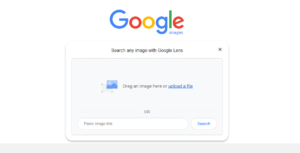
- How to use: “Go to images.google.com, click the camera icon to upload an image, or right-click on any picture in Chrome to select Search image with Google.”
2. Bing Visual Search
Bing, from Microsoft, is recognized as one of the best “shopping assistants” available in the visual world. It is very proficient at pinpointing consumer products available in a photo.
- Best suited for: Interior design and fashion. It can detect a particular product, such as a chair or shoes, in a crowded image and tell you where you can purchase it.
- Noteworthy Function/Feature: The “Looks Like” feature that offers comparisons of prices and offers similar designs of products.
- How it works: Simply open Bing Visual Search, click on the camera icon in the search bar, and upload your own image.

3. TinEye
TinEye is recognized as the engine of choice among photographers, creators, and attorneys. This service does not merely search for ‘similar’ pictures; it searches for actual pixels.
- Best for: Copyright tracking and finding the “first appearance” of an image on the internet.
- Unique Feature: It performs exceptionally well in identifying altered copies of a particular image, which might be cropped, altered, or adjusted for colors.
- How it works: Just go to the website tineye.com and enter the URL of the image you want to check or upload your own image.

4. Yandex Image Search
“The image recognition system that many experts consider the ‘gold standard’ is the search engine from Russia, Yandex, and it consistently scores higher than the competition in various technical categories,” according to The New York Times.
- Best suited for: Facial recognition, detecting landscapes. It impressively identifies social media profiles and matches that are missed by other engines.
- Special Feature: This technology boasts very advanced AI capabilities, which are recognized for their accuracy in detecting specific facial and object features.
- How to use: Give it a try in Yandex Images. Click the camera icon in the search bar to start searching.

How to Do Reverse Image Search (Step-by-Step)
How you do one might depend on the device type, but the procedure is generally the same.
Reverse Image Search on Desktop
- Open a web search engine of your choice and click the camera icon in the search bar.
- You can choose either to upload from the computer or paste a URL from an image search on another site.
- Alternatively, in the Chrome browser, you can right-click on any image from a website and choose “Search image with Google.”
Reverse Image Search on Mobile
- You can perform a reverse image search using your mobile browser by long-clicking on any image and getting a search option.
- Most smartphones even come with built-in visual search features such as Google Lens or Visual Look Up from Apple.
- Your phone’s gallery also has search capabilities using the lens icon. By clicking on this icon, you can instantly search for an image using AI capabilities.
Advanced Image Search Techniques
If a normal image search doesn’t work, apply these advanced strategies. You can filter by size, color, or type when looking for images with a certain style. You can search by dimensions, too, to ensure images downloaded come in high resolution only.
Your most powerful search strategy would be the combination search. You need to upload an image with a message embedded in it. This message could be anything from uploading a “shirt image” with a message writing “blue color shirts.” In such a case, Google would give results related to blue shirts in another color. You can even highlight, crop, and focus on one specific part of an image containing more than one image to ask the search engine to focus on just one object. You can also use image metadata when available to find deep details.
How to Find Copyright-Free Images
Finding images is one aspect; using them is another issue altogether. Knowledge about image licensing is pertinent when putting up images online.
Creative Commons is a licensing platform. It enables the user to share their images with certain restrictions. This could be one requiring copyright or another one giving images completely for commercial use.
Your best image search engine would be Google Images, and most images you see on Google Images would be copyright-free images. The error most people commit is considering images they see from Google Images as copyright-free images. To keep on the safe side, make sure to apply the “Usage Rights” filter from the “Tools” menu when searching with Google Images. This will give you a list of images that are designated for reuse. Checking for “usage rights” directly on a website is one way to avoid copyright infringement complaints.
Image Search Use Cases (Real-World)
For Bloggers & Content Creators
Utilize these methods to find suitable, high-resolution images for your blog topic or to find original artwork for a viral picture meme that may need to be attributed to its original author.
For Marketers & SEO Professionals
Track your brand imagery on social networks and stay on top of current visual trends within your industry.
For Designers & Developers
Quickly locate a hold image or reference a screenshot to determine fonts, colors, etc., used.
For Students & Researchers
Identify a picture from a historical event to determine if it has been properly viewed in light of historical changes. Also, locate a new, original, primary source for a designated picture document.
Image Optimization Before & After Image Search
The final image file uploaded to a search engine will determine its final image searching output. This means that if a low-resolution, pixelated thumbnail is used, the result might not clearly spot individual elements of a picture. This actually gives a clearer explanation of why imaging dimensions and sizes actually matter to a picture searching process.
Properly preparing images for web and social platforms and selecting the right quality will make it easier for picture-searching software to properly notice them. You can resize images for better quality and faster results to ensure that when you upload optimized images, you get better results.
Common Image Search Problems & Fixes
- If a picture searching application returns a “no result found,” adjust your searching criterion by taking out select, non-critical keywords, or if necessary, upload a less cropped, less detailed version of a picture.
- Sometimes, incorrect or irrelevant matches find their way into a picture search due to a picture’s intense alteration or low-quality image properties.
- In this event, alter your searching tool to TinEye or Yandex.
- However, if the image size is too large to upload, you can use a simple tool to compress the image size without sacrificing the image quality of the objects in the image.
Image Search vs Reverse Image Search
| Feature | Image Search | Reverse Image Search |
| Input | Text Query | Image File or URLs |
| Best for | Discovery of new ideas | Verification of existing files |
| Use case | Browsing for inspiration | Authenticity and source quality |
Best Practices for Precise Image Search Results
For an accurate and effective image search result, follow these best practices:
- Use multiple search engines: If Google Images search doesn’t turn up the correct results, you may use other search engines such as Bing Visual Search or Yandex, which may search other images on different sites.
- Use appropriate filters: Filter the result by image size, type, or color to get the required image.
- Use high-quality images: High-quality images have high resolution and thus allow AI to easily identify patterns in images.
- Do not over-crop the photos: Pictures with cropped backgrounds contain fewer features for the algorithm to analyze.
- Improve your search technique: Instead, you can use reverse image search in combination with descriptions to target the search engine more specifically.
By adhering to these best practices, one can achieve accurate matching results, optimal context identification, and efficient image retrieval.
Final Thoughts
Use these techniques to search your images and search the web in an efficient and respectful manner. The image search industry is on the verge of a revolution where you can search for anything you want for information just by pointing a camera towards what you want. It is important to always honor the creative process by scouting for licenses before reusing any picture you come across.
As AI advances, the speed and intelligence of our capability to seek and make meaning from the world of images will only improve. Future visual search technologies will likely integrate even more deeply with our daily lives.
FAQs
What is the best image search technique?
The best image search approach is to combine reverse image search with text search options. This helps the search engine both see and think about what you want since you will point out what you want using text searches.
How does reverse image search work?
This works because the search engine uses a mathematical approach that scans the image and finds patterns that match those of other images on the web to get a corresponding image.
Can I search an image from my phone?
Yes, you can do this on Google using their apps or Lens services on modern smartphones that can search any image in your smartphone or around you.
How do I know if an image is copyrighted?
You ought to follow the instructions on metadata or websites that offer licenses when you click on the image. This is especially true when you are not sure where the image was sourced; you can assume that all other images are copyrighted and not public or Creative Commons.
Why does image search show wrong results sometimes?
This usually happens if the image is too low in quality or if the subject is very generic. The AI might confuse one similar-looking object for another.